

When Deena Lang lost her job at a radio station during the pandemic, she decided to go all in on social media. She racked up nearly 100,000 followers on Instagram and often featured her son, who is now 13 years old.
“I was really, really heavily incorporating my son,” she says, “and not really thinking about what the ramifications were going to be long term.” Things seemed to be going fine; the Florida mom was making a full-time salary as an influencer while being able to stay at home with her son.
But one day, Lang was scrolling through her phone when she came across family photos on an account she didn’t own. In other words, someone had stolen her pictures and was impersonating her online.
“They were scamming people out of money, saying that they were a single mom [doing] psychic readings. They were using all of my pictures and my son’s pictures, claiming, ‘If you buy a psychic reading from me, this is the kid that you’re supporting,’” Lang says. She describes the situation as “eye-opening” and “super-scary.” She reported the fake account to Facebook, though she says the tech giant didn’t take any action. “Going through that and realizing that there were really not any protections in place really scared the crap out of me,” Lang says.
Still, she may have been able to write off the incident as a bizarre aberration if it weren’t for what happened next. Lang was at a gymnastics class with her son when they were accosted by an older woman who recognized him from social media. “She was screaming, I know you, I know you. It was terrifying for him,” Lang says. “That was the last time I posted his face. The woman was saying how [my son] reminded her of his grandson and she felt like she had this really deep emotional connection with my kid. And that’s what really made me stop and think, I’m putting my kid in danger.”
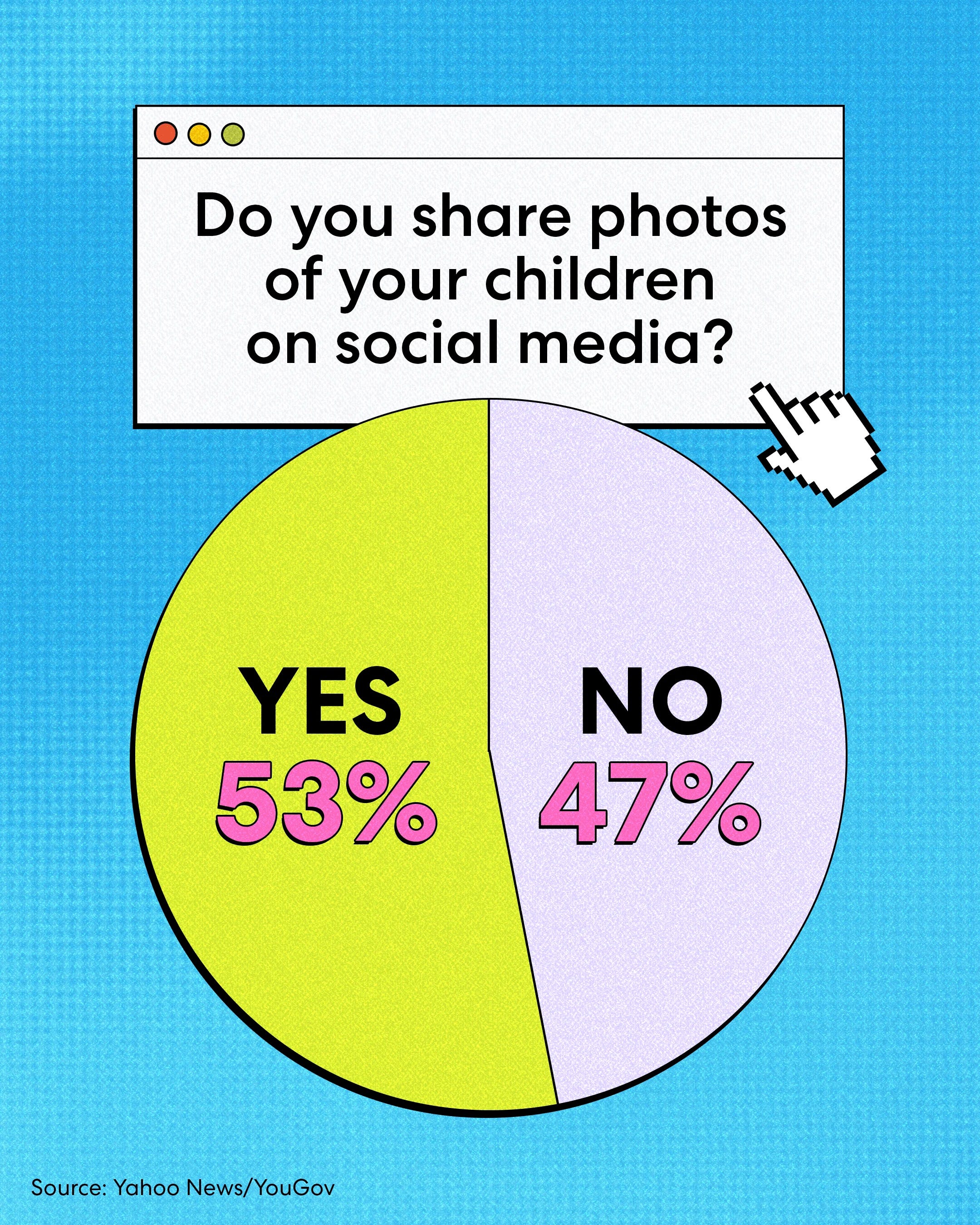
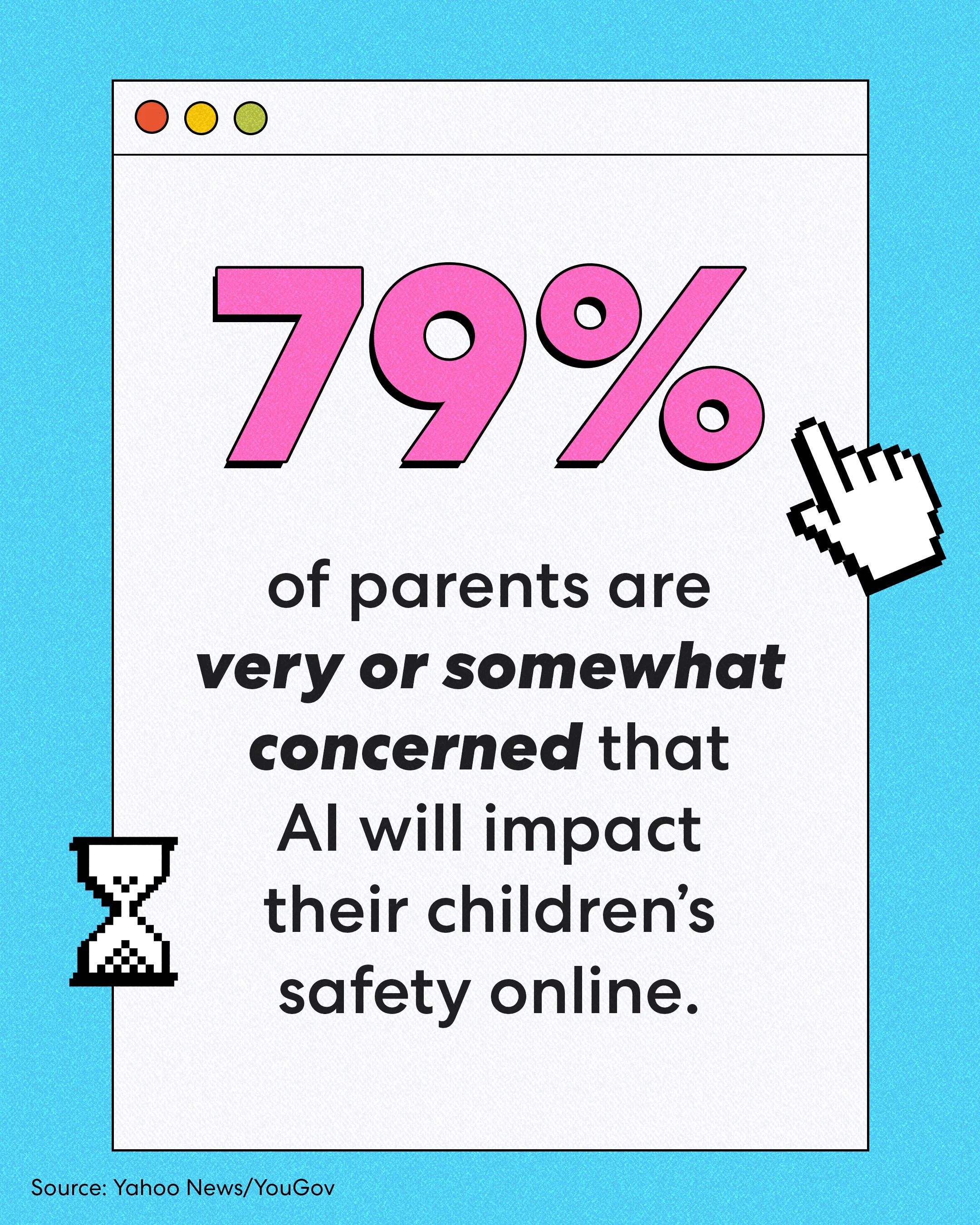
Now, Lang doesn’t show her son’s face online. She’s part of a growing movement of parents — not just influencers like Lang, but regular parents without massive social followings — who are rethinking how and what they share about their children online. Not long ago, it was almost unfathomable for a parent not to reflexively upload family photos to Facebook and Instagram; now a new Yahoo/YouGov poll shows that 47% of respondents said they don’t share photos of their children online, and 78% said they’re worried about their children’s privacy. Many of their fears seem to also be motivated by rapidly evolving technology: 79% said they were very or somewhat concerned about how AI would impact their children’s safety.
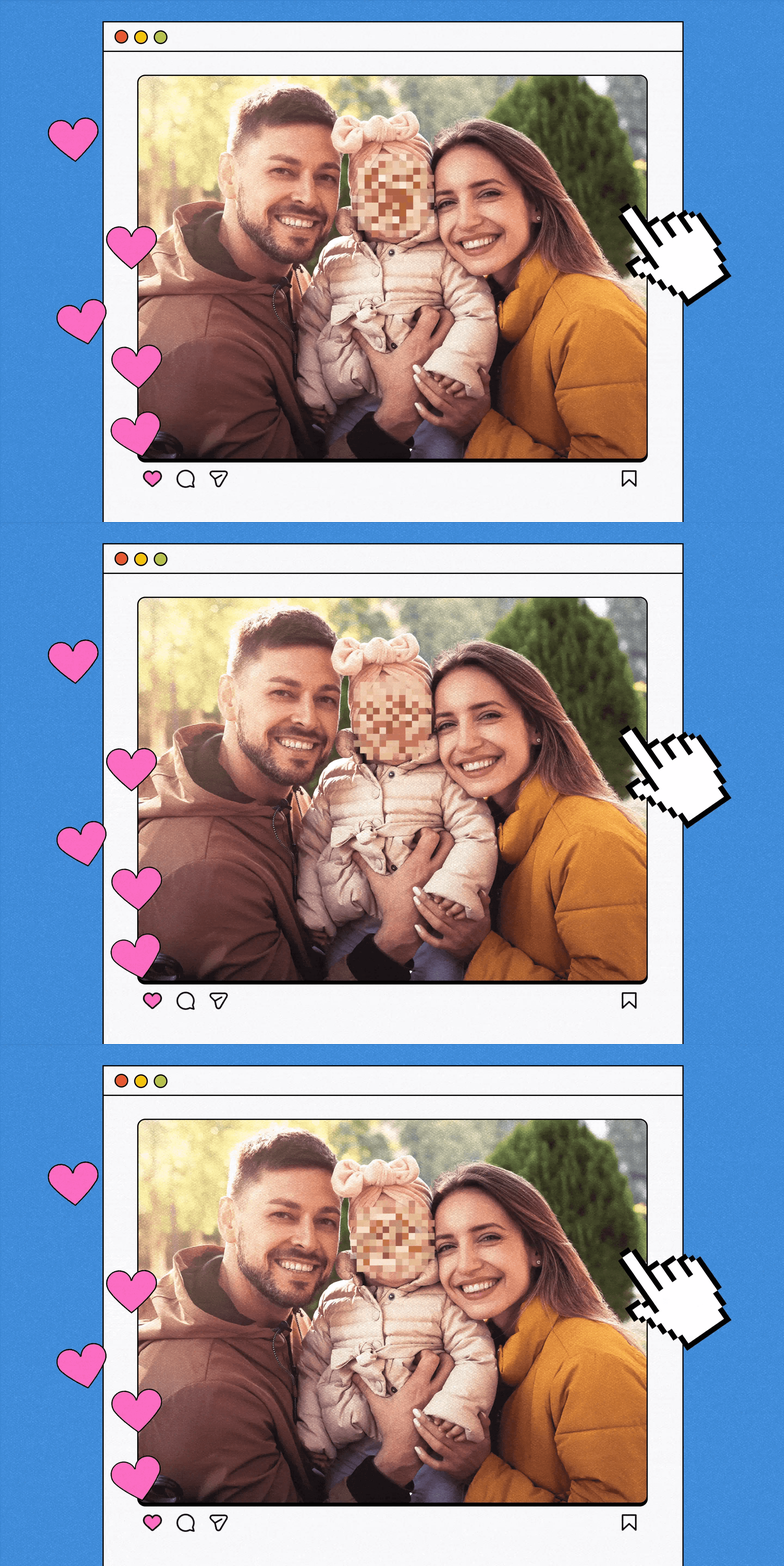
Some parents have responded by completely scrubbing their children’s presence from social media. Others have made compromises, like only posting their kids on Close Friends Stories or with emoji covering their faces. Whatever choice you make is inevitably interpreted as a reflection of the kind of parent you are. Frustratingly, there seems to be no right answer.
I’ve covered parenting culture on the internet for years as a journalist — for this story and my forthcoming book Like, Follow, Subscribe: Influencer Kids and the Cost of a Childhood Online — and I’ve observed how intensely judgmental these conversations can become. If you choose to not show your children online at all, the assumption is you’re paranoid and think you’re more important than you really are. But if you do still post your kids online, you’re not protecting them from the dangers of the wider digital world.
I’ve come to believe that the reason “sharenting” attracts so much controversy is because many parents feel unmoored, trying to make the best decisions they can as technology evolves faster than our norms around it. Other parents’ choices make us squirm — who’s really right here? — and inevitably expose our own uncertainty.
For some parents, the only right thing to do is to refuse to show their children at all. Sarah falls into this category. When her eldest child was hospitalized for a serious illness, she was warned away from sharing photos online. “The nurses told me that people will steal sick children’s photos online and post fake GoFundMes,” she said. “I couldn’t stand the thought of her suffering being used for some greedy person’s financial gain.” This is a common worry: Just how far can images and videos parents post of their children travel?
It’s also worrisome how close people can come to feel about children they see on their feeds. When mega mom influencer Emilie Kiser’s 3-year-old son, Trigg Kiser, died in a drowning accident last May, the intensity of the connection between fans and child influencers became clear. Fans posted photos of themselves sobbing about the news; a few accounts posed as Emilie mourning her late son; I scrolled through hundreds of montages of Trigg set to sad music. The reaction underscored just how little control families have over what happens to a child’s image once it circulates widely online.
One influencer with hundreds of thousands of followers told me she decided to stop sharing her child online when she found a subreddit dedicated to snarking about her every move. She requested to remain anonymous, in order not to invite more vitriol from commenters. Now, if she shows her kids, it’s only from the back or with an emoji covering their faces. Though some viewers and followers appreciate her move to protect her kids’ privacy, there’s also the opposite reaction. “There are people that are like, you putting an emoji over your kid’s face is so f***ing weird. You think you’re so important that people care about your kids,” she says. “It really intrigues me why that angers people more.” This mom influencer points out that if she did share content with her kids’ faces in it, she knows it would perform “10 times better.” But the trade-off is not worth it to her.
Similarly, Kayzie Weedman, a mom creator with over 610,000 Instagram followers, doesn’t show her children online, but her decision has prompted reactions from viewers who are insistent that they see them. “People surely think they’re entitled to seeing my children,” Weedman says. “They think they’re owed something from us. And I don’t really know why or how that happens, [but] I guess it comes with sharing your life on the internet.”
It’s not only influencers who have to contend with this off-putting dynamic. Sal, a father of two, used to be OK with photos of his son being posted online, until “one day a stranger approached me at the grocery store, recognizing my son from his grandpa’s Facebook. It freaked me out, and after that, we pulled all his pictures and asked friends and family to do the same.”
For some parents, the only way to protect their kids online is to never discuss them at all. Fiona, who has a 2-year-old, doesn’t even mention her kid online. “The only people who know I have a child are those I talk to in my daily life,” she says. “[By showing her online], I could make her vulnerable to predators through creating her online footprint. It is not my place to create an indelible mark about her on a global platform, which she cannot take away.”
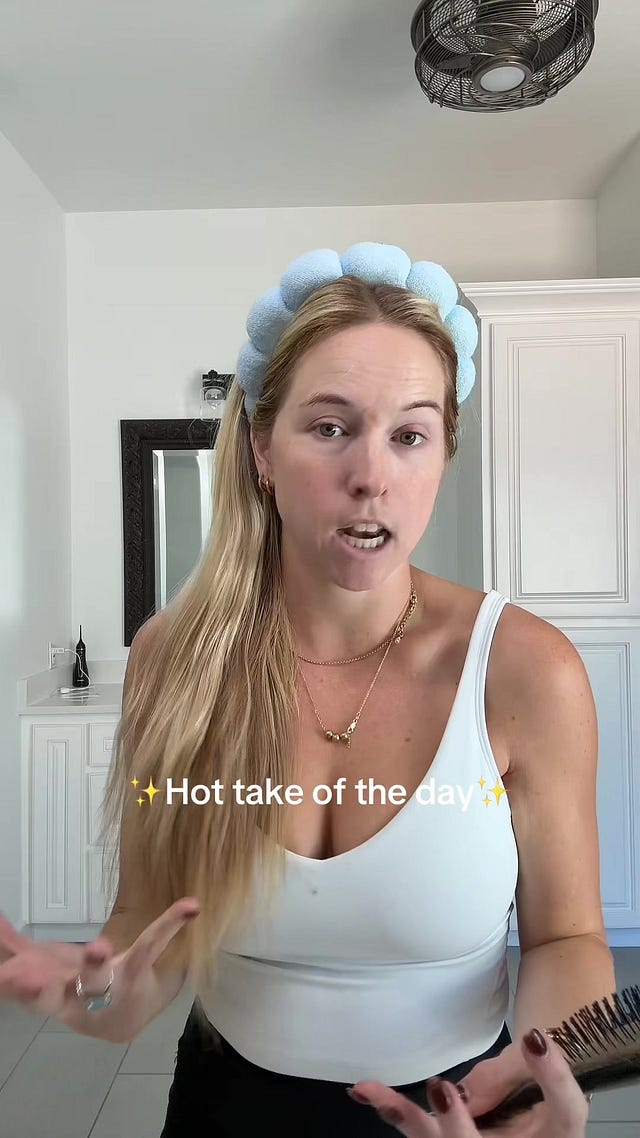
What’s perhaps most revealing is what happens when parents try to compromise. A TikTok video viewed over 1.7 million times posted by mom influencer Lottie Weaver summed up how negatively some people feel toward half measures: “If you’re a person that’s like, I don’t want to put my kids on social media but then [you] put a heart over their face, I think it’s kinda weird,” Weaver says. “If you don’t want your kids on social media, just don’t put them on social media at all.”
 Tiktok failed to load.
Enable 3rd party cookies or use another browser
For some viewers, it seems like parents who are using emoji to cover their kids’ faces want to have it both ways: to share what they want and to flex about how attuned they are to privacy and ethical concerns. “It just feels so self-important to me,” says author Anna David. “If you don’t want your kid’s face on social media, don’t post family photos.”
All this scrutiny has given rise to the pervasive internet rumor that emojis covering children’s faces can be digitally removed, rendering them useless. According to Roman Epishin, a parenting and child safety expert and head of social projects at Findmykids app, that’s not possible. “The final image that gets posted on Instagram, TikTok or Facebook doesn’t contain any of the original data from before it was edited,” he said. “None of the original pixels underneath remain.”
To be perfectly honest, I’ve sometimes felt personally assailed by some of these conversations. When I post my daughter online, I have chosen the apparently frowned-upon path of showing the back of her head or covering her face with an emoji. It feels like a way to both protect her privacy while also sharing something about my life as a mother. But still, I feel judged. Then again, I wonder: Why do strangers care this much?
Leah Plunkett, the author of Sharenthood, isn’t surprised at the passion directed at this issue. It’s in many ways a reflection of the insecurities baked into modern parenting. “Often, unconsciously, we get concerned that [other parents’] choices are somehow setting a standard that we either can’t meet or don’t want to meet,” she says. “We may be, again, often unconsciously working through our own comfort levels and our own choices. Sometimes critiquing or even just commiserating about other people’s parenting choices is a way of working through where we think the line should be in our own lives.”
For my part, I think this debate comes down to the essential truth of parenthood, and especially of motherhood: There is no way to win. Every choice is scrutinized. Every decision could be a mistake. Judging other parents is nothing new — it’s been around as long as parenting itself — but the internet has given us endless new ways to do it. If you don’t believe me, all you have to do is open social media.
If you liked this article, I wanted to remind you that my book that has been called a “gut-wrenching exposé” into family vloggers and mom influencers is now available for sale. You can get Like, Follow, Subscribe: Influencer Kids and the Cost of a Childhood Online at: Amazon, Barnes & Noble, Books-A-Million, Bookshop, Hudson Booksellers, Target, Walmart and more
My decision not to share my child’s face online comes down to safety, privacy, and respect. I’ve thought about this a lot as someone preparing to publicly document a year of travel with a toddler. Thank you for this post!
Antinatalism for the win.
This world is bullshit